

CHILDREN & FAMILY WELLBEING
Pastoral support and wellbeing for children and families
The key to success in life is ensuring that we all feel safe, heard and supported with our mental wellbeing. We understand that it can be worrying when your child is experiencing conflict at school and how difficult it is to try to resolve issues that have happened in school when children come home (as you are working with one perspective). We encourage children to share their concerns with us immediately if something has happened so that we can deal with them straight away and then communicate with parents in a timely and sensitive manner.
We also acknowledge that navigating everyday life can be tricky for children and parents from time to time and that you may need a helping hand or some guidance around anxiety, bereavement, conflict, routines or something else. Our pastoral team is here to help support with any of these issues whether they are present in school or happening at home. We rely on parents to share with us worries that the children have if they have not shared these in school.
Our pledge to you is that we will take the time to resolve any issues within the day where possible and ensure that the time is taken to support both victims and perpetrators in order to prevent repeated behaviour. Please ask how we have resolved and how you can support this at home.
We share our knowledge of this approach and our pastoral offering with our parents regularly through communications and a Therapeutic workshop for parents.
What is Pastoral Support?
Pastoral support focuses on your child’s emotional, social and mental wellbeing.
Children may need extra support for many reasons, including:
Friendship worries
Low confidence or self-esteem
Anxiety or big emotions
Changes at home or school
Bereavement or loss
Support is always offered in a calm, nurturing way and is tailored to each child’s needs.
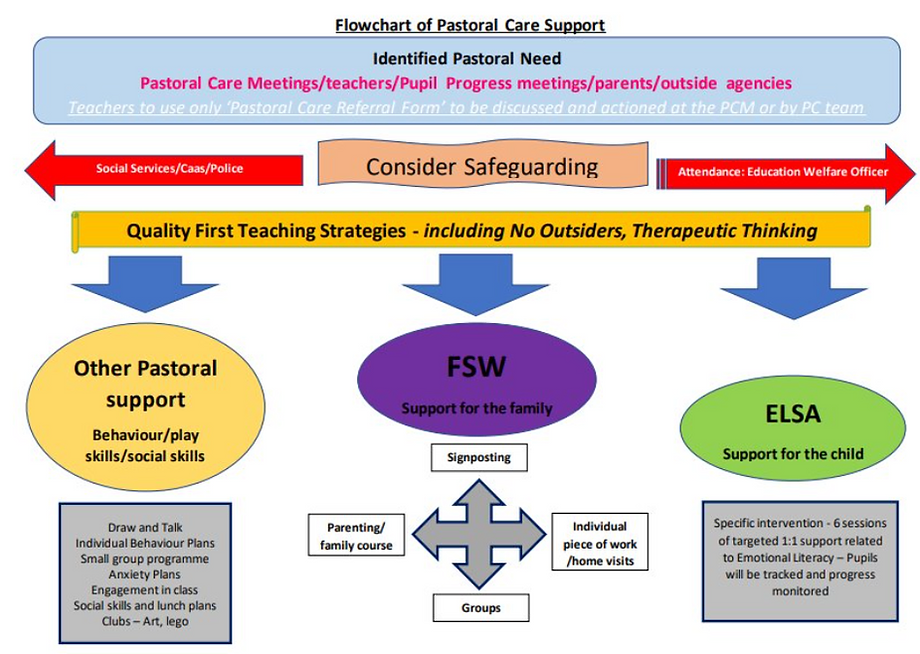
Please see below our Pastoral Support Flow Chart that indicates the considerations and process by which we signpost support through our triage meetings.
Meet the Pastoral Team
Our pastoral team is made up of trained and caring members of staff who work closely with class teachers and the SENCo. Children can be referred for pastoral support by:
-
Their class teacher
-
A parent or carer
Support usually takes place in a quiet, safe space within school, either one-to-one or (where appropriate) in a small group.
It is important that there are a number of staff available to form this team so that we are able to triage support to the right areas of specialism and also to ensure consistency and to streamline support. The team meets every three weeks to discuss new referrals and existing support on the caseload, to ensure that we are making the best strategic decisions.

Mrs Tina Alison
Headteacher, qualified SENDCo, Attendance Champion, Behaviour specialist

Mrs Sharon Syrad
Family Support Worker,
ELSA, Autism Champion

Miss Kerry Penn
Deputy Head, SENDCo,
Mental Health Lead
Safeguarding and Confidentiality
Links to Wellbeing and Safeguarding children
Listening to children
We believe that all children need to feel listened to feel safe. There can often be a difference between knowing you have the processes in place to listen and children really feeling listened to. We know that if children feel listened to then they will talk openly and honestly. This can be really helpful to their carers at school and at home to be able to identify any pastoral need and target support effectively. Our staff always listen to children and if they are unavailable then they will signpost to someone who is free to or come back to them later. This ethos allows children to feel nurtured and secure which in turn supports their sense of belonging and mental wellbeing so that they can learn more effectively. Sometimes the reasonable adjustments needed are therapeutic rather than academic.
Building relationships and Trust
At Long Lane we believe that building relationships and trust between staff and children leads to strong bonds and supports children with their wellbeing and confidence to learn, whether that be social learning or academic learning. Knowing that mistakes are ok and part of life, that FAIL is your First Attempt in Learning and that we look after each other can support children both with anxiety, resilience and confidence at school. It also means that children are more likely to feel that they are not alone if they have worries outside school. This can lead to more effective and targeted support.
Dealing with child on child abuse (bullying)
We have found that our robust therapeutic approach where everyone is listened to, behaviour and incidents are often considered a learning tool is successful. It is an opportunity to learn about social etiquette and diversity in a judgement free setting with trained staff who can support restorative conversations. This approach supports common therapeutic language, modelling and spending time resolving conflict or being upstanders to 'bullying' with a range of natural, educational and protective consequences to aid learning. We do not tolerate any form of bullying and attribute appropriate consequences. We actively teach our children through a range of assemblies, lessons, stories and responsive activities, how to resolve conflict and what the difference is between conflict and bullying. You can find more information about this on our 'Therapeutic Behaviour Approach' page.
Tackling poor attendance
As a direct result of our therapeutic approach to children and family circumstances and our bespoke support and provision, we are able to tackle poor attendance in a therapeutic way also. It is obviously essential that children attend school everyday. We take each individual case just as that and work closely with carers and children to ensure that we assist in removing any barriers to attendance issues whether that be practical obstacles or EBSA (Emotional Behavioural School Avoidance). At Long Lane our first priority in securing good attendance is making sure that our school is providing a rich range of fun and exciting experiences that tailor to all our children's needs, followed by an individual approach to supporting children with anxiety and worry about school or home. Closely linked with our pastoral and SEND professionals we make sure that tailored support for individuals follows a small steps programme that works for them and their families.


